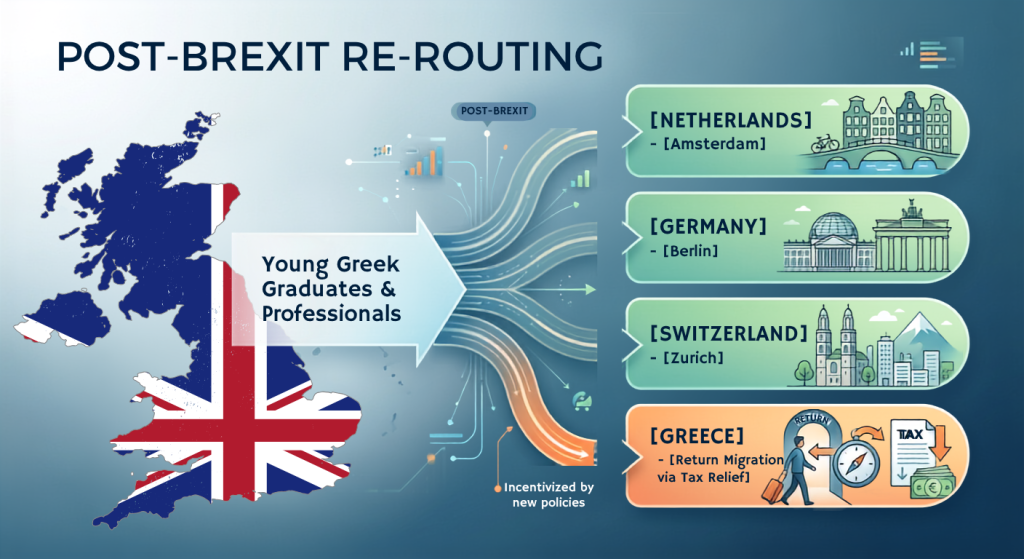
For decades, the path from Athens or Thessaloniki to London, Manchester, or Edinburgh was viewed as the ultimate professional upgrade. Driven out by the financial crisis, successive waves of highly educated Greek doctors, software engineers, academics, and corporate strategists sought refuge in the UK’s dynamic economy. They traded Mediterranean sunshine for professional recognition, meritocracy, and salaries that allowed for real savings.
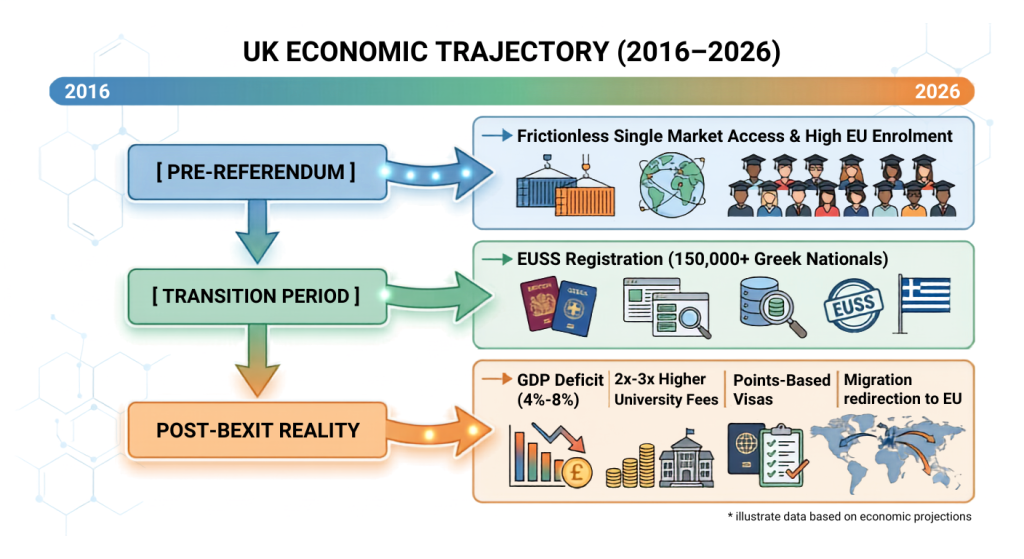
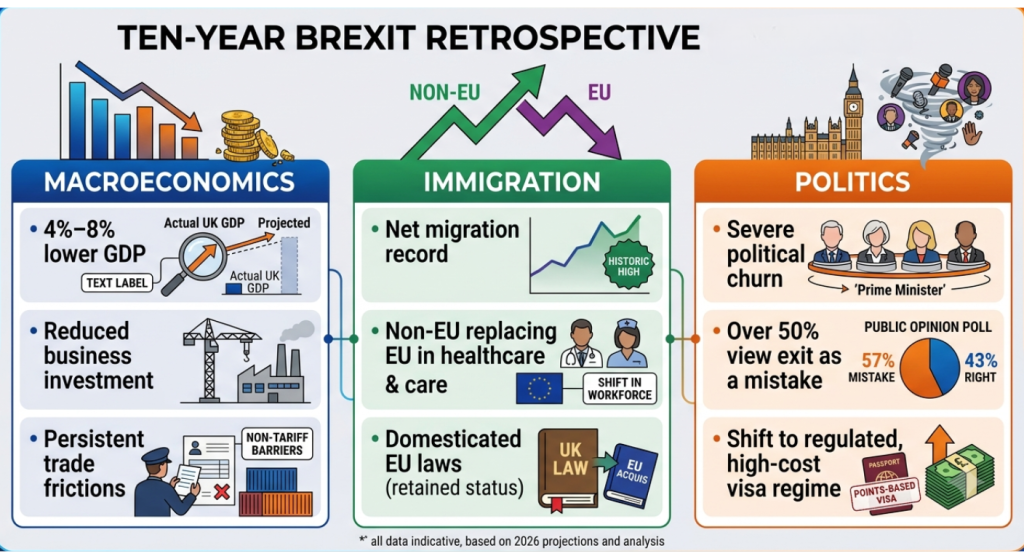
However, the economic landscape of 2026 presents a radically altered equation. Post-Brexit visa complexities, escalating living costs, and a restructured British tax environment have forced Greek expatriates to ask a fundamental question: Is living and working in the UK as a Greek professional immigrant still worth it?
To answer this, one must move past nostalgic perceptions and evaluate the pragmatic realities of contemporary British life—weighing soaring expenses against the professional mobility, earning potential, and lifestyle factors that define the migrant experience today.
The Financial Calculus: Navigating Post-2026 UK Living Costs
For any professional considering a move—or deciding whether to stay—the financial baseline has shifted dramatically. Understanding take-home pay versus non-negotiable living costs is essential for accurate budgeting.
Housing: The Primary Income Sink
Housing remains the single largest expense for immigrants in the UK. With average UK private rents reaching £1,366 nationally and prime city-centre locations demanding significantly higher premiums, rent frequently absorbs between 30% and 50% of a professional’s net income.
- London: A one-bedroom flat in central zones ranges between £1,500 and £2,200 per month, while two-bedroom properties often exceed £2,800.
- Regional Hubs (Manchester, Birmingham, Leeds): One-bedroom city-centre apartments generally range from £650 to £1,200, offering a substantial reduction in overhead without completely sacrificing career opportunities.
Beyond base rent, tenancy agreements require an upfront deposit equivalent to five weeks’ rent. Local taxation in the form of Council Tax adds an average of £144 per month (ranging from ~£1,200 for Band A to ~£2,000+ per year for Band D properties), depending on the borough and valuation band.
Utilities and Everyday Overhead
The days of cheap domestic energy in the UK are firmly in the past. Standard monthly utility and recurring commitments for a single professional or couple typically include:
- Electricity & Gas: £50–£100 per month for a modest apartment; £150–£250 for larger properties.
- Water Services: £30–£50 per month.
- Connectivity (Broadband & Mobile): £35–£80 per month combined.
- TV Licence: £159 annually (~£13/month), a legal requirement for live broadcasts and BBC iPlayer.
- Groceries: £150–£250 monthly for a single adult, expanding to £400–£600 for a family of four.
Transportation and Mobility
Public transport remains the primary choice for urban professionals. While extensive, networks are costly. Intercity rail travel and city travelcards can demand £100 to £300 per month. Car ownership introduces fuel expenses (hovering around £1.40/litre, aided by extended fuel duty relief), annual vehicle tax (£165–£540), insurance (£500–£1,200+ annually for foreign drivers building UK credit history), and routine maintenance.
Income, Taxation, and Salary Realities
While the average UK monthly salary hovers around £5,940 (skewed by high-earning financial and tech sectors), a realistic entry-to-mid-level professional gross salary spans £35,000 to £60,000 depending on the field and location.
The UK operates a progressive tax system:
- Personal Allowance: Up to £12,570 (0% tax).
- Basic Rate (20%): £12,571 to £50,270.
- Higher Rate (40%): £50,271 to £125,140.
- National Insurance Contributions (NIC): An additional 12% on earnings between £12,570 and £50,270, and 2% above that threshold.
| Category | Single Professional | International Student | Family of 4 |
| Rent | £800–£1,500 | £400–£900 (Shared/Halls) | £1,200–£2,500 |
| Utilities | £120–£200 | £80–£150 | £250–£400 |
| Groceries & Food | £150–£250 | £120–£200 | £400–£600 |
| Transport | £100–£150 | £50–£100 | £200–£350 |
| Council Tax | £100–£200 | Exempt | £200–£450 |
| Miscellaneous | £100–£200 | £80–£150 | £300–£500 |
| Total Monthly Cost | £1,370–£2,500 | £750–£1,500 | £2,550–£4,800 |
To clear basic expenses outside London, a single worker needs a minimum salary of £20,000–£25,000. However, to live comfortably, save, and maintain a reasonable standard of living, a single professional requires £30,000–£35,000+, while a family of four typically needs a combined household income of £45,000–£60,000.
The Greek Professional Perspective: Pros vs. Cons
Evaluating whether the UK remains an attractive destination requires looking beyond raw spreadsheets to compare the structural environments of Greece and the UK.
PROFESSIONAL ADVANTAGES
- Structural Meritocracy & Fair Growth
- High Salary Ceilings in Key Sectors
- International Market Prestige
- Vibrant Diaspora & Cultural Outlets
FINANCIAL & SYSTEMIC CHALLENGES
- Soaring Housing & Utility Overhead
- Post-Brexit Visa Friction & NHS Surcharge
- Tax Traps & High Marginal Rates
- Quality of Life / Weather Trade-offs
The Pros: Why Greeks Still stay to the UK?
- Meritocracy and Career Velocity: Unlike the often bureaucratic or network-dependent hiring processes in southern Europe, the UK corporate culture largely operates on merit, speed, and output. Professional advancement can happen rapidly for high performers.
- Salary Ceilings and Global Exposure: In sectors like fintech, biotechnology, corporate law, engineering, and specialized medicine, UK compensation ceilings remain significantly higher than in Greece. Experience gained in London or corporate regional centers carries immediate global capital.
- Infrastructure and Diaspora Support: Major UK cities feature established Greek communities, specialty supermarkets, direct flight connections to Athens and Thessaloniki, and active professional networks (e.g., Greek medical and academic societies in the UK).
- Access to Capital: For tech founders and entrepreneurs, the UK ecosystem provides access to venture capital, angel investors, and accelerator programs that dwarf most continental alternatives.
The Cons: The Friction Points
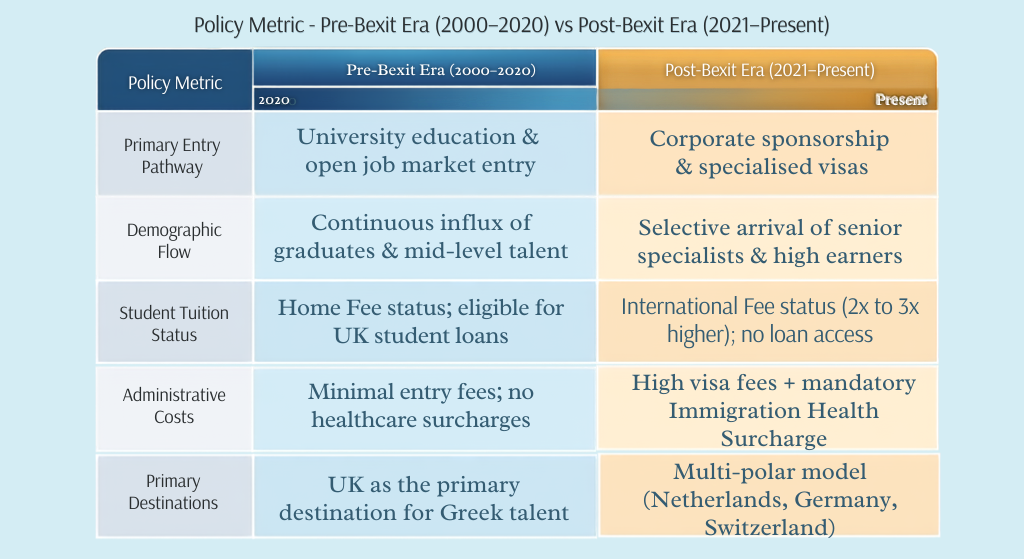
- The Post-Brexit Immigration Barrier: EU freedom of movement is gone. Greek professionals must secure a Skilled Worker visa, meet strict minimum salary thresholds, and pay heavy upfront fees—including the Immigration Health Surcharge (IHS)—which can total thousands of pounds before even setting foot in the country.
- The High-Cost, High-Tax “Squeeze”: Moving from basic rate to higher rate tax at £50,270 can feel punishing when paired with high local inflation, energy costs, and elevated rents. The ability to build significant cash savings quickly has diminished compared to a decade ago.
- Work-Life Balance and Climate: The trade-off between the Mediterranean lifestyle, natural light, and relaxed social rhythms versus the fast-paced, weather-challenged UK urban lifestyle remains a permanent psychological factor for Greek expatriates.
- Property Ownership Hurdles: While homeownership among native UK residents sits higher, only ~43% of foreign-born residents own their homes (dropping to under 20% for recent arrivals). High property prices (£270k–£300k UK average, much higher in the South) and strict mortgage stress-testing make stepping onto the property ladder difficult without significant capital brought from abroad.
The Verdict: Is It Still Worth It?
The UK is no longer an effortless, automatic choice for every Greek graduate. The era of moving casually on a low wage to “figure things out” has effectively ended due to immigration rules and living costs.
However, for qualified professionals, specialists, and ambitious careerists, the UK remains overwhelmingly worth it under specific conditions:
- It IS worth it if: You are in a high-demand sector (medicine, software engineering, finance, specialized consultancy), qualify comfortably for a Skilled Worker visa, earn above the national median (£35k+ starting, with a clear path to £50k+), and view the UK as a 3-to-7-year accelerator for your international career or capital accumulation.
- It IS NOT worth it if: Your expected salary sits near minimum visa thresholds in high-cost areas like London, or if your primary goal is immediate property acquisition and an outdoor-centric lifestyle without a substantial financial cushion.
Succeeding as a Greek professional immigrant in the UK today requires strategic planning. Choosing the right city, negotiating visa sponsorship terms carefully, understanding net tax outcomes, and maintaining a solid 3-to-6-month emergency fund (£5,000–£10,000 for singles) are the pillars that transform a UK move from a financial struggle into a life-changing career move.